-

Brandon Thompson - CEO - Commercial and Personal Insurance Agent -

Kirk Reisner - CFO - Commercial Insurance Agent -
Jenessa Figinsky Commercial Account manager Springfield, MO -
Tyler Hunter - Licensed Producing Agent, Oak Grove, MO



What Is General Liability Insurance?
Commercial general liability insurance, often called GL or CGL, helps protect your business when someone alleges your operations caused a covered injury or property damage.
For example, a customer might trip over equipment at your job site, or an employee could accidentally damage a customer’s property while performing a service.
Depending on the claim and policy terms, coverage can include legal defense, settlements, and judgments. General liability is an important foundation for business insurance, but additional policies may be needed for vehicles, employees, equipment, and professional services.
What Does General Liability Insurance Cover?
Bodily Injury Liability
Coverage for certain claims alleging your business caused physical injury to someone other than an employee.
For example, a customer could trip over a hose your crew left across a walkway and seek payment for medical expenses and other damages.
Property Damage Liability
Coverage for certain claims alleging your business damaged someone else’s property.
For example, an employee might accidentally break a customer’s window while moving a ladder. Coverage depends on the circumstances and applicable exclusions, including restrictions involving property you are working on or have in your care.
Personal and Advertising Injury
Coverage for specified offenses, which may include libel, slander, or certain advertising-related injuries.
This coverage has defined terms and exclusions. It should not be treated as protection for every marketing dispute, intellectual property allegation, or online statement.
Products and Completed Operations
Coverage may apply when a product you sell or work you have completed causes covered bodily injury or property damage.
For example, a customer might allege that a completed installation later caused damage to another part of the building.
This is different from a guarantee that your work will perform correctly. Repairing defective work itself can be excluded, even when resulting damage raises a separate coverage question.
Defense Against Covered Lawsuits
A liability allegation can require a legal response even when your business disputes responsibility. General liability can provide a defense against suits seeking covered damages, subject to the policy.
Who Should Consider General Liability Insurance?
General liability deserves consideration if your business:
- Works at customers’ homes or commercial properties.
- Has customers, vendors, or visitors at its premises.
- Performs construction, installation, maintenance, or repair work.
- Sells or distributes products.
- Rents commercial space.
- Signs contracts requiring liability insurance.
Contractors, retailers, restaurants, service companies, and many other businesses can face these exposures.
Your coverage should reflect all the services you provide—not just the description that appears in your business name.
Do Contractors and Subcontractors Need General Liability Insurance?
General contractors, property managers, and commercial customers often require proof of general liability insurance before work begins.
The requirements may specify:
- Minimum liability limits.
- Additional insured status.
- Coverage for ongoing and completed operations.
- A waiver of subrogation.
- Primary and noncontributory wording.
- Additional limits through umbrella or excess insurance.
Send your agent the insurance requirements before accepting a project. A policy with the requested dollar limit may still need endorsements to address other requirements.
A certificate of insurance summarizes coverage. It does not add coverage or change the policy.
What Do Per-Occurrence and Aggregate Limits Mean?
Your general liability policy can include several different limits.
The per-occurrence limit is generally the maximum payable for covered bodily injury and property damage arising from one occurrence, subject to the policy.
The general aggregate generally limits the total payable for covered claims subject to that aggregate during the policy period.
The products-completed operations aggregate generally applies separately to covered claims within the products-completed operations hazard.
For example, $1 million per occurrence and a $2 million general aggregate does not mean you have $2 million available for a single occurrence.
If a contract requires higher per-occurrence limits, additional primary coverage or an applicable umbrella may be needed.
What Does General Liability Insurance Not Cover?
General liability does not replace a complete business insurance program. Common exclusions and limitations can involve:
- Employee injuries: Generally addressed through workers’ compensation and employers liability.
- Vehicle liability: Generally addressed through commercial auto and applicable hired or non-owned auto coverage.
- Damage to your own building, tools, or equipment: Generally addressed through commercial property or inland marine coverage.
- Professional errors: May require professional liability insurance.
- Cyber incidents: May require cyber insurance.
- Employment disputes: May require employment practices liability insurance.
- Pollution: May require specialized coverage.
- Defective work and property in your care: Subject to important exclusions and exceptions.
The policy’s forms and endorsements matter. Two quotes showing the same limits can provide different protection.
What Should Businesses Know About Hiring Subcontractors?
Hiring a subcontractor does not eliminate your business’s liability exposure.
Before work begins, review the subcontractor’s insurance and your own policy’s requirements. Depending on your coverage, you may need to collect certificates, maintain written agreements, or confirm specified limits and endorsements.
Some policies restrict coverage involving uninsured subcontractors or particular subcontracted work. Subcontractor costs may also affect your premium audit.
Tell MBG Insurance what you subcontract and how you verify subcontractors’ coverage so we can review those details with you.
How Much General Liability Coverage Do You Need?
The appropriate limits depend on your operations and the potential severity of a claim.
Important considerations include:
- The type of work you perform.
- Where employees work and who could be injured.
- The value of customers’ property.
- Products sold or work completed.
- Customer, landlord, and contractor requirements.
- Business assets and financial resources.
An established service company can have significant exposure even with a small staff. Your insurance review should consider both contractual minimums and what a serious claim could cost.
If you need additional liability limits, visit our commercial umbrella insurance page.
How Much Does General Liability Insurance Cost?
Pricing depends on your industry, business activities, revenue, payroll or other rating basis, claims history, limits, location, and underwriting factors.
A retail store presents different exposures than a tree service or a contractor working inside occupied buildings. Subcontracted work and specialized services can also affect eligibility and pricing.
Some policies are subject to a premium audit. If your actual sales, payroll, or other rating information differs from the original estimate, your final premium may change.
MBG Insurance reviews your operations to explore options with carriers that fit your business.
Why Choose MBG Insurance?
MBG Insurance helps business owners understand what they are buying and how their policies work together.
As an independent agency, we work with multiple insurance companies and review options based on your operations and coverage needs. Our team can help you evaluate:
- Whether your services are accurately described.
- Liability limits and important exclusions.
- Customer and contractor insurance requirements.
- Additional insured endorsements.
- Coverage changes as your business grows.
- Options for related business insurance.
Our Springfield and Oak Grove, Missouri, and Bentonville, Arkansas, offices work together to serve businesses across both states.
General Liability Insurance FAQs
Helpful Articles from the InsuranceNerds!

"Kirk and the Crew at Millennium have gone above and beyond to help me find the right insurance for my rental properties. They always take the time to explain the options of each company they bring to the table. I highly recommend MBG Insurance for all your insurance needs."
JW Delong
"Can't say enough good things about Tyler and MBG Insurance. I reached out to 4 insurance brokers, he was by far the quickest and most knowledgeable about the industry. Also gave me recommendations and discounts that I was not aware of. In the end I was able to lower my insurance premium by 17%."
Derek Lee
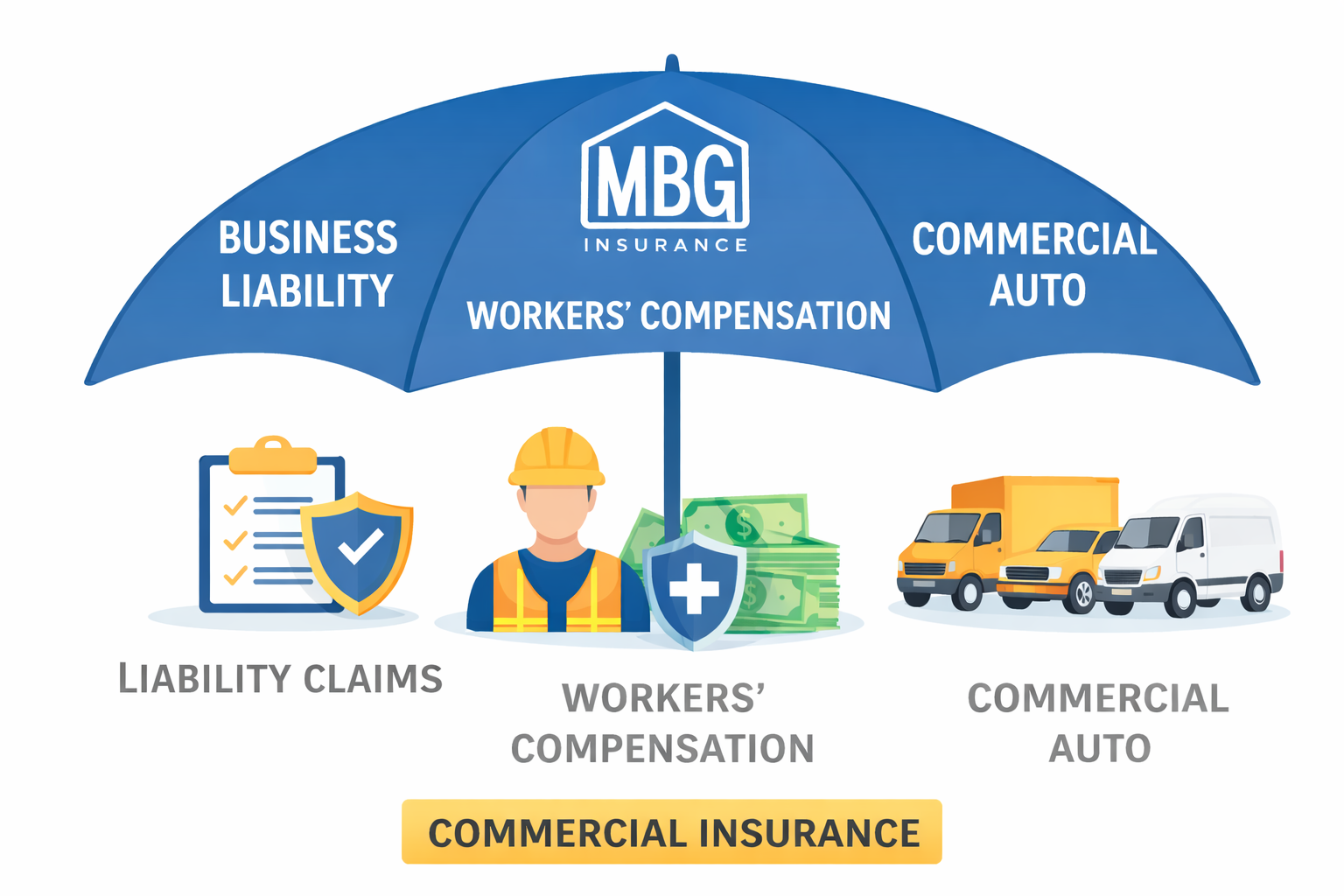
Explore our commercial insurance options for additional protection for your business.
Coverage is subject to the issued policy’s terms, conditions, exclusions, and available limits. Eligibility and requirements vary by carrier.
Updated October 19, 2026